TECHNICAL SCIENTIFIC COMMITTEE
Leadership and Governance
SICC Series CBRNe Conference 2026
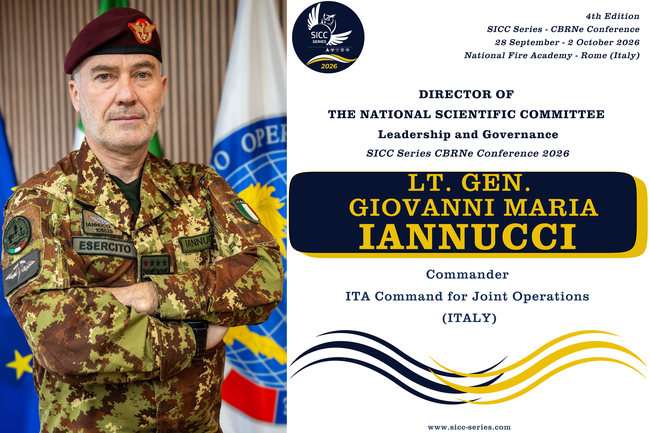
Lieutenant General Giovanni Maria Iannucci was appointed Commander of the Joint Operations Headquarters (COVI) on 9 January 2025, upon the proposal of the Minister of Defence, with effect from 20 January 2025.
- On 5 October 2023, he was appointed Chief of Cabinet to the Minister of Defence, after a period as Commander of the Italian Army Southern Operational Forces in Naples.
- From 10 May 2022 to 24 May 2023, he served in Iraq as Commander of the NATO Mission in Iraq (NMI), during which he was promoted to Lieutenant General.
- From 2019 to 2022, he served as Chief of Defence Policy and Plans at the Italian Defence General Staff, also fulfilling the role of Director of Defence Policy and Capabilities.
- Promoted to Major General in 2018, he was appointed Deputy Chief of Staff – Operations (DCOS OPS) at the Joint Operations Headquarters (COVI) from 2016.
- In 2015, he assumed command of the “Folgore” Paratrooper Brigade after returning from Afghanistan, where he served in 2014 as Deputy DCOS Operations, ISAF, following his promotion to Brigadier General.
- From 2012 to 2014, he served as Chief J3 of the Italian Joint Operations HQ (COVI).
- In 2010, upon returning to Italy, he took command of the 185th RRAO, after serving from 2008 to 2010 in Germany as Chief Joint Fires of the UK Allied Rapid Reaction Corps (ARRC-UK), following his promotion to Colonel.
- From November 2004 to July 2008, he was the Military Assistant to the Chief of Staff of the Italian Army.
- Between 2003 and 2004, he commanded the Target Acquisition Group and was deployed to Iraq as Victor Task Force Commander during Operation “Ancient Babylon”, having earned his qualification as Target Acquirer.
- After completing the Joint Services Staff Course (ISSMI) in 1999, following the Advanced Staff Course at the Argentine Army Staff College, he was assigned to the Office of the Chief of Staff of the Italian Army.
- In 1997, after completing the Basic Staff Course at the Italian Army War College, he served as Chief Operations Officer of the “Folgore” Paratrooper Brigade.
- From 1994 to 1996, he commanded the Cadet Company of the 176th Course at the Military Academy of Modena.
- Commissioned in 1988, he began his career with the 185th Paratrooper Artillery Group, taking part in Operation UNOSOM-IBIS in Somalia, serving first as Deputy Commander and later as Commander of a 105/14 artillery battery.
- He attended the Military Academy of Modena (166th Course “Dignità”) and subsequently the Army Application School in Turin.
- Lieutenant General Iannucci is a qualified military parachutist, certified in free-fall techniques, holds parachute qualifications from several foreign countries, and is a certified Instructor of Military Parachutists. He speaks English and Spanish and holds degrees in Economics and Commerce, Strategic Sciences, and a Master’s in International Military Strategic Studies. In recognition of his distinguished service, he has been appointed Knight and Commander of the Order of Merit of the Italian Republic, and awarded the Italian Army Gold Cross of Merit, the Gold Medal for Command Seniority, and the Parachutist Long-Service Medal. He has also received decorations from Argentina, the United States, Hungary, France, and Spain.
New members will be added in the next days, but let's start to present the authorities and experts you can have the chance to meet at SICC Series CBRNe Conference 2026.

Salem Abdullah bin Barrak Al Dhaheri is a Brigadier General and serves as Director General of the Abu Dhabi Civil Defence Authority. He leads strategic planning and operational readiness for emergency response, fire safety, and civil protection across the Emirate of Abu Dhabi. With extensive experience in crisis management and public safety, he oversees the implementation of advanced technologies and smart systems to enhance rapid response capabilities. He has played a key role in strengthening resilience against complex risks, including CBRN-related threats and large-scale emergencies. Under his leadership, the Authority has expanded international cooperation and adopted best practices aligned with global standards. He is also actively engaged in initiatives promoting community awareness, prevention, and integrated emergency management.
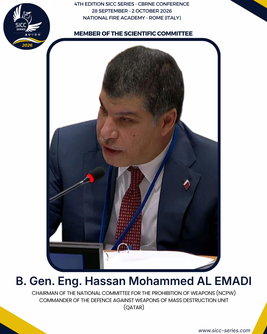
Brigadier General Engineer Hassan Mohammed Al Emadi is a senior Qatari official with extensive experience in CBRN defence, non-proliferation, and international security. He serves as Chairman of the National Committee for the Prohibition of Weapons (NCPW), leading national efforts in compliance with international disarmament frameworks and coordination with organizations such as the United Nations. He is also Commander of the Defence Against Weapons of Mass Destruction Unit, overseeing operational preparedness, response capabilities, and strategic planning related to chemical, biological, radiological, and nuclear threats. His work focuses on strengthening national resilience, enhancing interagency coordination, and promoting regional and international cooperation on WMD non-proliferation and security.

Major General Dr. Shaikh Hamad bin Mohammed Al Khalifa is a senior Bahraini security official serving as Deputy Chief of Public Security within the Ministry of Interior of the Kingdom of Bahrain. In this role, he supports the leadership of national public security forces, contributing to law enforcement coordination, internal security, and strategic policing operations. He has represented Bahrain in high-level international and regional security forums, including meetings of Arab police and security leaders, and has actively contributed to strengthening international cooperation and security partnerships. His work focuses on enhancing operational readiness, interagency coordination, and the development of modern security strategies to address evolving regional and global threats.
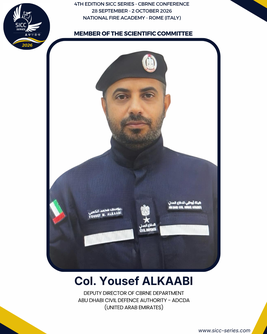
Youssef Alkaabi is a Colonel and serves as Deputy Director of the CBRNe Department within the Abu Dhabi Civil Defence Authority. He plays a key role in coordinating preparedness, response, and mitigation strategies for chemical, biological, radiological, nuclear, and explosive threats. With strong operational experience, he oversees specialized units, training programs, and technical procedures related to hazardous materials and complex emergency scenarios. He contributes to the development of national capabilities in CBRNe risk management and supports the integration of advanced detection and response technologies. He is actively involved in international cooperation, exercises, and knowledge exchange initiatives aimed at enhancing resilience and interoperability in emergency management systems.

Bernd Allert is a Colonel (ret.) of the German Army and a senior expert in Chemical, Biological, Radiological and Nuclear (CBRN) defence. He has extensive experience in CBRN doctrine development, training, and operational support at both national and NATO levels. He served in key roles at NATO structures, including the Weapons of Mass Destruction Centre and the Joint CBRN Defence Centre of Excellence, contributing to capability development and standardization. He has been actively involved in multinational cooperation, exercises, and education, supporting interoperability among allied forces. His expertise focuses on CBRN defence, civil-military coordination, and advanced training for complex risk and emergency scenarios.

Ibrahim Mohamed Zainal Almarzouqi is a Colonel of the Abu Dhabi Civil Defence Authority and currently serves as Director of the Chairman’s Office. He has extensive experience in emergency management, strategic planning, and institutional coordination within civil defence structures. He plays a key role in supporting executive leadership, contributing to policy development and organizational effectiveness. He has been actively involved in CBRNe risk management, including the development of procedures and frameworks for complex emergency scenarios. He participates in international cooperation initiatives, conferences, and knowledge exchange activities aimed at strengthening resilience and interoperability in civil protection systems.

Alessandro Amorosi is an Italian physician and healthcare executive currently serving as Health Director of ASST Papa Giovanni XXIII in Bergamo, one of the leading hospital institutions in Lombardy. He holds a degree in Medicine and Surgery and is specialised in Hygiene and Preventive Medicine, with further postgraduate training in public health and healthcare management at the London School of Hygiene and Tropical Medicine. He has developed extensive experience in healthcare system organisation and strategic planning, having worked both in major hospital settings and within the Directorate General for Welfare of the Lombardy Region, where he contributed to the development of clinical networks, emergency systems, oncology pathways, transplantation services, and transfusion systems. His professional activity focuses on healthcare innovation, integration of services, and the optimisation of clinical governance and organisational models in complex healthcare systems.

Volodymyr Andronov is a Professor at the National University of Civil Defence of Ukraine and serves as Vice-Rector for Scientific Work. He has extensive experience in civil protection, fire safety, and technical risk assessment, with a strong background in engineering and applied research. He has contributed to scientific studies on fire resistance, environmental safety, and hazardous materials, supporting the development of methodologies for emergency response and risk mitigation. He is actively involved in academic leadership, research coordination, and international scientific cooperation. His expertise focuses on civil protection, fire safety engineering, and preparedness for complex and high-risk scenarios.
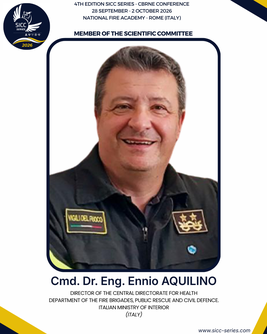
Ennio Aquilino is a senior official of the Italian National Fire Corps and serves as Director of the Central Directorate for Health within the Department of the Fire Brigades, Public Rescue and Civil Defence of the Italian Ministry of the Interior. He has extensive experience in emergency management and crisis response, having held several high-level command positions at provincial and regional level. He has managed complex operations during major national emergencies, including natural disasters and large-scale rescue missions. He contributes to the development of health and safety policies, operational standards, and preparedness strategies within the Fire Brigades. His expertise includes integrated emergency management, risk assessment, and coordination in complex scenarios, including CBRN-related events.

Roberto Bei is a Full Professor of General Pathology at the University of Rome Tor Vergata and currently serves as Dean of the Faculty of Medicine and Surgery. He graduated with honors in Medicine and Surgery from Sapienza University of Rome, where he also specialized in Medical Oncology and Clinical Pathology and obtained his PhD. He has been part of Tor Vergata since 2001, progressing from researcher to Associate Professor and then Full Professor. He coordinates the single-cycle degree in Medicine and Surgery and the PhD program in Tissue Engineering and Remodeling Biotechnologies for Body Function. His research focuses on experimental oncology and cancer immunotherapy, with strong international collaborations, including the National Cancer Institute (NIH, USA).

Guido Bertolaso is an Italian physician and senior public official, currently serving as Regional Minister for Welfare of Lombardy. He has extensive experience in emergency management and crisis response, having led the Italian Civil Protection Department for nearly a decade. He has coordinated major national and international emergencies, including natural disasters and large-scale humanitarian operations. He also served as Undersecretary of State to the Prime Minister with responsibility for civil protection and held several extraordinary commissioner roles. His expertise focuses on large-scale emergency coordination, civil protection systems, and resilience in complex crisis scenarios.

Giampietro Boscaino is a senior officer of the Italian National Fire Corps and currently serves as Director of the Central Directorate for Prevention and Technical Safety, Fire Prevention and Energy within the Department of the Fire Brigades, Public Rescue and Civil Defence. He also holds the position of Vice President of the Central Technical-Scientific Committee for fire prevention. He graduated with honors in Civil Engineering from the University of Naples Federico II and specialized in Environmental and Sanitary Engineering. Throughout his career, he has held senior command and leadership roles at provincial, regional, and central levels, including Director of the National Fire Academy and Provincial Commander of Palermo and Rome. He contributed to key national regulations, including DPR 151/2011 and the Italian Fire Prevention Code.
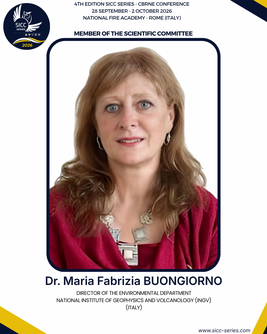
Maria Fabrizia Buongiorno is Director of the Environment Department at the National Institute of Geophysics and Volcanology (INGV). She is a geologist and senior technologist with extensive experience in Earth observation and remote sensing, having served as national coordinator of INGV remote sensing activities since 2005 and, since 2020, as Head of the INGV Centre for Earth Observation from Space. Her work focuses on satellite-based monitoring of environmental and geophysical phenomena, including volcanic activity and natural hazards, and she has led numerous national and international projects in collaboration with major organizations such as ESA, NASA, and the Italian Space Agency. Her research contributes to risk mitigation, environmental protection, and the integration of advanced technologies into civil protection and decision-making processes.
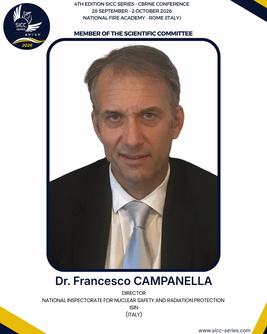
Francesco Campanella is Director of the National Inspectorate for Nuclear Safety and Radiation Protection (ISIN), the Italian independent authority responsible for nuclear safety and radiological protection. Appointed in 2024 following governmental nomination and parliamentary approval, he brings extensive experience in radiation protection, nuclear safety, and regulatory activities. He holds a degree in Physics and has worked for many years as a senior expert in radioprotection, including roles within INAIL and participation in national and European technical and regulatory working groups, particularly in the implementation of EURATOM directives. His professional activity has focused on inspection, regulatory oversight, and the development of guidelines and best practices in radiation protection, as well as training and academic teaching in the field. As Director of ISIN, he oversees national supervision of nuclear installations, radioactive waste management, and environmental radioactivity, ensuring compliance with international safety standards and supporting Italy’s obligations within EU and global nuclear governance frameworks.

Dr. Marco Carbonelli is an Italian engineer and CBRN expert specialized in risk management, critical infrastructure protection, and crisis response. He holds a degree in Electronic Engineering from Sapienza University of Rome, a PhD in Industrial Engineering, and an International Master of II level in Protection against CBRNe Events at the University of Rome Tor Vergata. He is a qualified NBC expert at the Scuola Interforze per la Difesa NBC and has extensive experience in ICT security, communication and information systems (CIS), and civil protection emergency management. He has worked for over twenty years in research and since 2006 in the Italian central Public Administration, including roles related to cybersecurity and national-level risk governance. He is also a lecturer at the University of Rome Tor Vergata within the International Master Courses in Protection against CBRNe Events and in anti-corruption programs. Author of more than 180 scientific and technical publications and several books, his work focuses on terrorism analysis, CBRN risk assessment, and resilience of complex systems.

Carlo Catalano is a Lieutenant General of the Italian Army Medical Corps and serves as Inspector General of Military Health at the Italian Defence General Staff, Ministry of Defence (Italy). He has extensive experience in military healthcare, cardiology, and medical command, developed through a long career within the Military Hospital of Rome “Celio,” where he held senior roles up to Director. He has been deployed in international operations, including Iraq and Kosovo, leading medical units and field hospitals in complex operational environments. He also served as Head of the Italian Army Medical Corps, contributing to the organization and modernization of military health services. His expertise focuses on military medicine, emergency healthcare, and medical preparedness in complex and CBRN-related scenarios.

Marcello Cavalcaselle is an Embassy Counsellor at the Italian Ministry of Foreign Affairs and International Cooperation, where he serves as Head of Office within the Directorate General for Political Affairs and Security. He has extensive experience in diplomatic affairs, international security, and multilateral relations, with a focus on strategic and geopolitical issues. Throughout his career, he has contributed to the development and implementation of Italy’s foreign policy, including coordination with international organizations and partners on security-related matters. He has been involved in initiatives related to crisis management, non-proliferation, and international cooperation, supporting Italy’s role in global stability and security frameworks. His expertise focuses on political analysis, diplomatic negotiation, and coordination in complex international environments.
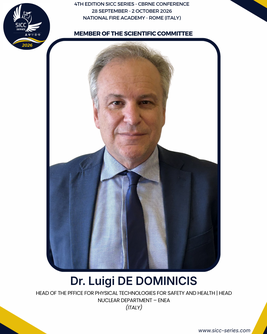
Luigi De Dominicis is a senior scientist at ENEA, where he serves as Head of the Physical Technologies and Security Division within the Nuclear Department. He has extensive expertise in nuclear technologies, radiation detection, and advanced security systems, with research activities focused on the development of sensors, photonic devices, and innovative solutions for monitoring nuclear facilities, critical infrastructures, and CBRN threats. He has coordinated and contributed to major national and international projects in the field of security and counter-terrorism, including initiatives related to the detection of explosives and hazardous materials, as well as European programmes for CBRN preparedness. His work integrates applied research, technology transfer, and operational support to public authorities and industry, contributing to advancements in safety, environmental monitoring, and emergency response systems.

Dario De Masi is a Colonel of the Italian Army and serves as Commander of the 7th CBRN Regiment “Cremona.” He has extensive experience in chemical, biological, radiological, and nuclear defence, leading one of Italy’s key military units specialized in CBRN operations. He oversees training, operational readiness, and deployment of specialized units for high-risk and complex scenarios. He plays a central role in strengthening national capabilities and supporting civil–military cooperation in emergency response. He is actively involved in international exercises and partnerships, contributing to interoperability and knowledge exchange in CBRN defence. His expertise focuses on CBRN operations, force protection, and crisis management in complex environments.

Thomas Dekorsy graduated from RWTH Aachen, Germany, in Physics in 1993. He obtained his PhD in ultrafast laser spectroscopy in 1996. Until 2005 he was department head at the Helmholtz Research Center Dresden Rossendorf working with a THz free-electron-laser. From 2005 to 2016 ha was professor/Dean in the Physics Department at Konstanz University. From 2016 until today he is director of the Institute of Technical Physics of the German Aerospace Center (DLR) and Professor at the University of Stuttgart, Germany. His research interest lies in laser applications for defense and security including CBRN standoff detection.
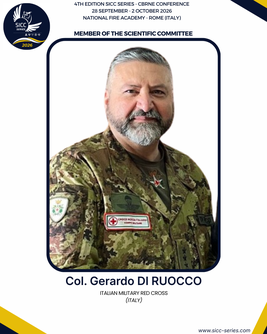
Colonel Gerardo Di Ruocco is a senior officer of the Italian Red Cross Military Volunteer Corps (Corpo Militare Volontario della Croce Rossa Italiana – CMV-CRI), currently serving as Commander of the Corps. With a distinguished career spanning military support, emergency management, humanitarian operations, and civil protection, he has held several leadership positions within the National Inspectorate of the Italian Red Cross Military Corps. A lawyer by profession, based in Rome, Colonel Di Ruocco has extensive experience in operational planning, crisis response, military-health support, and humanitarian assistance. Throughout his career, he has contributed to the development of training activities, operational doctrines, and preparedness programs supporting both national and international emergency response missions. He is also actively involved in promoting International Humanitarian Law and strengthening cooperation between military, civil protection, and healthcare institutions. disasters, and humanitarian crises in Italy and abroad.

Slavko Dimović is Director of the Vinča Institute of Nuclear Sciences, the leading multidisciplinary research institute in Serbia and part of the University of Belgrade. He is a principal research fellow with extensive expertise in radiation protection, environmental engineering, and nuclear technologies, having previously worked within the Department of Radiation and Environmental Protection. His research focuses on radioactive waste management, environmental remediation, and the application of advanced materials and technologies for radiation safety. As Director, he oversees strategic development, international cooperation, and major scientific programmes, contributing to the advancement of nuclear science, environmental protection, and energy-related research in Serbia and at the European level.

Luigi Esposito is a Colonel of the Italian Army serving as Military Advisor at the Permanent Representation of Italy to the Organisation for the Prohibition of Chemical Weapons in The Hague. He has extensive experience in CBRN defence, international security, and military advisory roles within multilateral frameworks. In his current position, he supports diplomatic and technical activities related to the implementation of the Chemical Weapons Convention, contributing to coordination between national authorities and international partners. He is actively involved in international cooperation, conferences, and expert forums focused on non-proliferation and chemical security. His expertise focuses on CBRN defence, arms control, and multilateral security cooperation.
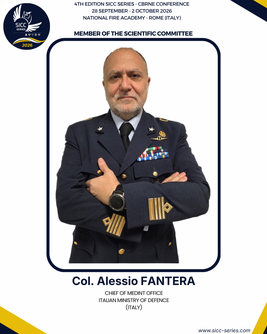
Alessio Fantera is a Colonel of the Italian Air Force, and in 2025 he took the position of chief of the MEDINT Office within the Italian Defense Joint Intelligence Center. He joined the Italian Air Force in 1999, applying as a medical officer having graduated cum laude in 1991 and having already graduated as specialist in ENT Surgery in 1996. He then earned a graduation in Anaesthesiology (2006). Spent most of his active duty (2000-2015) in operations abroad and in 2015 was assigned to the HQ for Joint Operations, beginning as chief of MEDEVAC Section, eventually, in 2019, taking the position of head of the JMED Office, keeping it for 6 years.

Cesare Fanton is an Inspector Admiral of the Italian Navy Medical Corps with extensive experience in military healthcare and operational medicine. He joined the Italian Navy in 1978 and developed a long career within military medical services, including roles in hyperbaric medicine and naval healthcare systems. He has held senior advisory and leadership positions within the Italian Navy, NATO, and joint military structures, contributing to strategic health support and operational planning. He has been deployed in numerous international missions, including Bosnia, Kosovo, Iraq, Afghanistan, Lebanon, Libya, and the Indian Ocean, supporting medical operations in complex environments. He has also been involved in humanitarian missions, including hospital ship operations, and currently contributes as a senior advisor in military health and defence medical systems.

Col. Marco Ferrara is an officer of the Italian Army and currently serves as Commander of the 28th Operational Communications Regiment “Pavia” (Pesaro). Born in Salerno in 1979, he attended the Military Academy of Modena, where he began his military career specializing in operational communications. Over the years, he has gained extensive experience in command, training, and operational environments, contributing to the development of capabilities in Operational Communications and Psychological Operations (PSYOPS), a core function of the Regiment within the Tactical Intelligence Brigade. In October 2025, he assumed command of the Regiment in Pesaro, demonstrating strong leadership, organizational skills, and a focus on innovation, strategic communication, and interoperability with NATO and international partners.

Fabio Florindo is President of the National Institute of Geophysics and Volcanology (INGV) and an internationally recognized geophysicist. He has extensive experience in Earth sciences, particularly in paleomagnetism, geodynamics, and climate-related studies. He has held senior scientific and leadership roles within INGV, including Research Director and Head of Department. He has contributed to major international research programs, strengthening global cooperation in geosciences. His expertise focuses on geophysics, natural hazard monitoring, and the scientific support to civil protection systems.
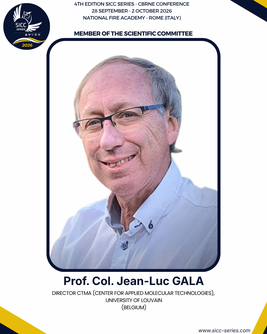
Jean-Luc Gala is a Full Professor at the Université Catholique de Louvain and a recognized expert in molecular biology and biodefence. He is Director of the Centre for Applied Molecular Technologies (CTMA) and a former Medical Colonel, combining academic, military, and operational expertise. He has extensive experience in CBRN risk management, particularly in biological threat detection and rapid diagnostic systems. He is the founder of the B-LiFE mobile laboratory, designed for field deployment in health emergencies and crisis scenarios. He has contributed to international initiatives and has been appointed as a United Nations expert for biological threats. His expertise focuses on molecular diagnostics, biodefence, and operational response to complex biological and CBRN incidents.

Francesco Garaci is a Full Professor at the University of Rome Tor Vergata and a specialist in radiology and diagnostic imaging. He serves as Vice Director of the Department of Biomedicine and Prevention and Director of the Complex Operational Unit of Diagnostic Imaging at the Policlinico Tor Vergata. He has extensive experience in clinical practice, academic teaching, and medical research, particularly in advanced imaging techniques and neuroradiology. He has held key roles in both university and hospital settings, contributing to the development of radiological services and training programs. He is actively involved in national and international scientific collaborations and research initiatives. His expertise focuses on diagnostic imaging, neuroradiology, and the application of innovative technologies in clinical practice.

Pierpaolo Gentile is a senior officer of the Italian National Fire Corps and currently serves as Head of the Office for CBRN Risk within the Central Directorate for Emergency, Technical Rescue and Wildfire Fighting at the Ministry of the Interior. He has extensive experience in emergency response, operational coordination, and CBRN risk management, having also served as Provincial Commander and held technical and leadership roles within the Fire Corps. He is actively involved in national activities related to CBRN preparedness and response, contributing to training, operational lessons learned, and interagency coordination. His expertise focuses on CBRN risk management, emergency operations, and crisis response in complex scenarios.

Marco Ghimenti is a senior officer of the Italian National Fire Corps and currently serves as Director of the Central Directorate for Emergency, Technical Rescue and Wildfire Fighting at the Ministry of the Interior and Deputy Head of the Italian National Fire Corps. He holds a degree in Civil Engineering and has a background as a reserve officer in the Italian Navy. He has extensive experience in emergency management, operational coordination, and air rescue, including qualification as a helicopter pilot with operational flight activity in Fire Corps aviation units (rotary- and fixed-wing, including Canadair). He has held key leadership roles as Provincial Commander in several major cities and as Director of the National Fire Academy, and has also served as Regional Director in multiple regions. His expertise focuses on emergency response, air operations, and crisis management in complex scenarios.
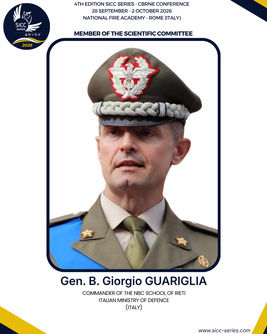
Giorgio Guariglia is a Brigadier General of the Italian Army and Commander of the NBC (Nuclear, Biological, Chemical) Defence School in Rieti. He has extensive experience in CBRN defence, military training, and operational planning, developed through a long career in specialized units and command roles within the Italian Armed Forces. He oversees advanced training programs for national and international personnel in CBRN risk management and response. He is actively involved in interagency and multinational cooperation, contributing to exercises, doctrine development, and capability building. His expertise focuses on CBRN defence, training, and preparedness for complex and high-risk scenarios.

Fabio Italia is a senior Italian public administrator with extensive experience within the Ministry of the Interior, currently serving as Director General for financial planning and economic affairs in the Firefighters Department. He has held top-level managerial positions since 2011, including Director for financial resources and strategic programming. Previously, he worked at the State General Accounting Office and the Ministry of Treasury, developing strong expertise in public finance and auditing. He is a certified Chartered Accountant and registered statutory auditor. He holds a Master’s degree in Public Ethics and another in Public Policy Analysis. He has extensive experience in EU funds auditing and financial control systems. He has served in several high-level boards and audit committees, including national agencies and the Italian Red Cross. He is also an experienced lecturer in public accounting, audit, and internal control systems. His work combines financial governance, public administration, and institutional oversight. He is fluent in English and French and has strong organisational and leadership skills.

Muhammad Javed Athari is a representative associated with Pakistan House, involved in international cooperation and institutional engagement activities. He contributes to initiatives aimed at promoting dialogue, cultural exchange, and collaboration between Pakistan and international partners. He has participated in international events and forums, supporting diplomatic and organizational coordination. His expertise focuses on stakeholder engagement, international relations, and cooperation in multicultural and institutional contexts.

Radovan Karkalic is a Full Professor at the Military Academy of the University of Defence in the Republic of Serbia and a recognized expert in CBRN defence. He has over 20 years of experience in both military and academic environments, teaching at Bachelor’s, Master’s, and PhD levels. He combines strong theoretical knowledge with practical expertise in CBRN protection, including contemporary detection systems and training in contaminated environments. He has held leadership and coordination roles in education and research, fostering international cooperation and academic partnerships. He is also a Visiting Professor at the University of Rome Tor Vergata. His expertise focuses on CBRN defence, training, and operational preparedness in complex scenarios.

Nathan Levialdi Ghiron is a Full Professor of Management Engineering and currently serves as Rector of the University of Rome Tor Vergata. He has extensive experience in academic leadership and higher education governance, having previously served as Pro-Rector and Director of the Department of Enterprise Engineering. He has coordinated doctoral programs and advanced training initiatives, including a Master’s program focused on public administration. His research focuses on sustainability, public and healthcare management, and Industry 4.0, contributing to the development of models for organizational performance and innovation. He has led and participated in numerous national and international research projects, strengthening collaboration between academia, healthcare systems, and public institutions.

Brigadier General Florigio Lista, MD, PhD is Director of the Italian Defence Institute of Biomedical Sciences (ISBD) and a recognized expert in CBRN defence, military medicine, and biodefence. He graduated with honors in Medicine and Surgery from the University of Florence and completed advanced research training at leading international institutions, including Columbia University, National Cancer Institute, and the U.S. Army Medical Research Institute of Infectious Diseases.Throughout his career, he has served in several international military operations and has led major biomedical and CBRN research programs. During the COVID-19 pandemic, he established and coordinated the Italian military molecular surveillance laboratory network (DIMOS MILNET), supporting national diagnostic and monitoring activities. Brig. Gen. Lista represents Italy in several international CBRN and biodefence initiatives, including the Biological Weapons Convention, NATO Science and Technology Organization, and the European Defence Agency. He is the author of more than 180 scientific publications and several patents in molecular microbiology, biosafety, and CBRN protection, and has received numerous national honors for his scientific and military service.

Andrea Magrini is a Full Professor of Occupational Medicine at the University of Rome Tor Vergata and serves as Health Director of the Policlinico Tor Vergata (PTV), one of the main university hospitals in Italy. His academic and clinical activities focus on occupational health, environmental medicine, and risk prevention, with particular attention to workplace safety and public health protection. He has extensive experience in healthcare management and has played a key role in the organisation of hospital services and emergency response, including during major public health crises. He has authored numerous scientific publications and contributes to teaching and training activities for medical students and healthcare professionals, supporting the development of integrated approaches to occupational and environmental health.

Dr. Fabiola Mancone is Director of the Scientific Police Service of the Italian State Police within the Central Directorate for Scientific Police and Cyber Security, Ministry of the Interior. With more than 30 years of experience in law enforcement, she has held several senior leadership positions in forensic sciences, criminal investigations, and public security. Her expertise includes biometric identification systems, fingerprint examination, forensic document analysis, crime scene investigation, and international police cooperation. She has coordinated major national and European forensic projects and represented the Italian Scientific Police in international working groups. Dr. Mancone is also actively involved in professional education, lecturing in forensic sciences, criminology, and investigative technologies for the Italian State Police, universities, and international training programmes.

Francesco Marelli is a Programme Management Officer at the United Nations Interregional Crime and Justice Research Institute (UNICRI), where he works on international security, CBRN risk mitigation, and the prevention of illicit trafficking of hazardous materials. His activities focus on the development and implementation of capacity-building programmes, policy support, and international cooperation initiatives aimed at strengthening resilience against chemical, biological, radiological, and nuclear threats. He has contributed to several United Nations projects involving law enforcement, border security, and strategic trade controls, collaborating with national authorities and international organizations. His work supports global efforts to enhance preparedness, response capabilities, and regulatory frameworks in the field of non-proliferation and security.
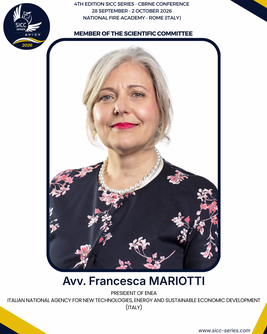
Francesca Mariotti is President of the Italian National Agency for New Technologies, Energy and Sustainable Economic Development (ENEA). She is a lawyer and senior manager with extensive experience in public administration, economic policy, and institutional governance. She previously served as Director General of Confindustria and held leadership roles in fiscal policy and industrial strategy. She has been involved in national and international boards, including major industrial companies, contributing to strategic decision-making and governance. She supports the development of research, innovation, and energy transition policies at national and international level. Her expertise focuses on public governance, economic policy, and institutional management.

Dr. Ing. Tarquinia Mastroianni is Director of the Istituto Superiore Antincendi (ISA), the National Fire Academy of the Italian National Fire and Rescue Service (Corpo Nazionale dei Vigili del Fuoco). An engineer with over 30 years of experience in fire and rescue services, she has held numerous operational and strategic leadership positions within the Italian National Fire and Rescue Service. Her expertise covers fire prevention, industrial risk, technical safety, emergency response, occupational health and safety, and firefighter training. Throughout her career, she has served at provincial, regional, and national levels, contributing to the development of fire safety regulations, technical guidelines, and emergency management policies. She has also coordinated activities related to major emergencies, civil protection, wildfire response, and workplace safety, fostering cooperation between public institutions, research organizations, and the emergency response community.
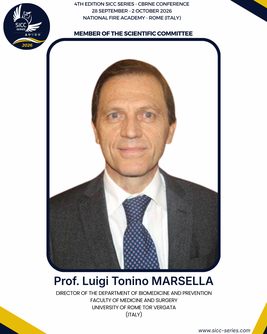
Luigi Tonino Marsella is a Full Professor at the University of Rome Tor Vergata and Director of the Department of Biomedicine and Prevention. He is a specialist in forensic medicine (legal medicine), with extensive experience in medico-legal evaluation, public health, and risk assessment. He has held key academic and institutional leadership roles, contributing to the development of research, teaching, and third mission activities within the Department. He is actively involved in national and international collaborations, supporting public health policies and medico-legal frameworks. His expertise focuses on forensic medicine, risk assessment, and health protection in complex and multidisciplinary scenarios.

David Martinek is a Colonel of the Czech Army and serves as Director of the NATO Joint Chemical, Biological, Radiological and Nuclear Defence Centre of Excellence (JCBRN Defence COE) in Vyškov. He has extensive experience in CBRN defence across tactical, operational, and strategic levels, including roles at NATO headquarters such as SHAPE in Belgium. He has been deployed in international operations, including ISAF in Afghanistan and EUFOR ALTHEA in Bosnia and Herzegovina. He has held key leadership positions in training, education, and doctrine development, contributing to NATO capability development and standardization. His expertise focuses on CBRN defence, multinational training, and interoperability in complex and high-risk scenarios.
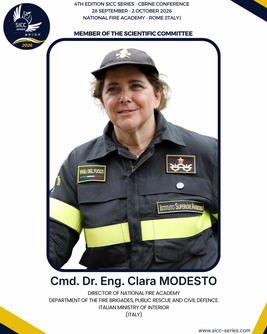
Clara Modesto is a senior officer of the Italian National Fire Corps and currently serves as Director of the National Fire Academy (Istituto Superiore Antincendi – ISA) under the Ministry of the Interior. She has extensive experience in fire safety, technical risk management, and training, developed through a long career in operational and leadership roles. She has held key positions at provincial and regional level, contributing to emergency response and coordination activities. She oversees advanced training programs, international cooperation, and capacity building initiatives. Her expertise focuses on fire safety engineering, training systems, and preparedness for complex and high-risk scenarios, including CBRN-related events.

Arcangelo Moro is a Colonel of the Italian Army and currently serves as Director of the Military Chemical Pharmaceutical Plant in Florence, the State-owned pharmaceutical facility under the Ministry of Defence. He is an officer of the Cavalry branch with extensive experience in command and staff roles at national and international level. He previously served as Commander of the Army Military Command “Puglia” and has been deployed in multinational environments, including assignments with the U.S. Central Command (CENTCOM).  His current role focuses on managing strategic pharmaceutical production, supporting public health and defence needs, and strengthening cooperation with institutional and research partners. His expertise focuses on military leadership, strategic coordination, and health-related capabilities in complex operational environments.
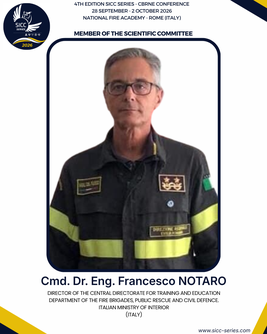
Francesco Notaro is a senior officer of the Italian National Fire Corps and currently serves as Director of the Central Directorate for Training within the Department of the Fire Brigades, Public Rescue and Civil Defence at the Ministry of the Interior. He has extensive experience in training systems, operational preparedness, and institutional coordination, developed through leadership roles at regional and central level. In his current role, he oversees the design and coordination of national training programs, including basic, specialized, and advanced courses, as well as professional development activities. He promotes cooperation with universities and international partners to enhance capacity building and interoperability. His expertise focuses on training systems, emergency preparedness, and capability development in complex and high-risk scenarios, including CBRN-related environments.
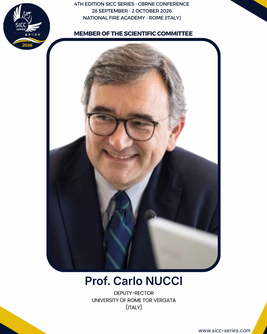
Carlo Nucci is a Full Professor of Ophthalmology at the University of Rome Tor Vergata and currently serves as Pro-Rector (Vicario) of the University. He has extensive experience in academic leadership, clinical practice, and medical research, particularly in ophthalmology and visual sciences. He is Director of the Department of Experimental Medicine and has held key roles in teaching and program coordination within the Faculty of Medicine. He also holds clinical responsibilities at the Policlinico Tor Vergata, contributing to advanced diagnostic and surgical activities. His research focuses on neurodegeneration, glaucoma, and innovative approaches in ophthalmology, with active involvement in national and international scientific collaborations.

Leonardo Palombi is a Full Professor of Hygiene, Epidemiology and Public Health and currently serves as Rector of the Catholic University “Our Lady of Good Counsel”. He has held several senior academic roles, including Director of the Department of Biomedicine and Prevention and member of the Academic Senate at Tor Vergata. His research focuses on epidemiology, global health, and public health systems, with extensive international experience in humanitarian and health cooperation programmes in Africa, the Balkans, and the Middle East, including collaborations with organizations such as WHO, World Bank, and UNICEF. He has coordinated major programmes on infectious diseases, HIV/AIDS, and health system strengthening, and has authored numerous scientific publications, contributing significantly to public health research and emergency preparedness, including CBRN-related health aspects.
Renato Antonio Presilla is President of the Interregional Council of Chemists and Physicists of Lazio, Umbria, Abruzzo and Molise and an experienced professional chemist with a long-standing career in environmental safety and industrial consultancy. He holds a degree in Chemistry from the University of Perugia and has been registered as a professional chemist since the early 1990s, also obtaining the European Chemist (EurChem) qualification. His professional activity focuses on environmental protection, hazardous materials management, and workplace safety, with roles including technical director and consultant in sectors such as waste management, industrial safety, and the use of dangerous substances. He has served in national professional bodies, including the National Federation of Chemists and Physicists, and contributes to training, regulatory activities, and expert consultancy for courts and public institutions.

Maria Pannuti is a senior officer of the Italian National Fire Corps and currently serves as Deputy Director of the Central Directorate for Training within the Department of the Fire Brigades, Public Rescue and Civil Defence at the Ministry of the Interior. She has extensive experience in emergency management, operational coordination, and training systems, developed through numerous leadership roles, including Provincial Commander and positions at regional and central level. She has participated in several national and international emergency operations, contributing to crisis response activities. She holds a degree in Mechanical Engineering and a Master’s degree in Protection against CBRNe Events. Her expertise focuses on training systems, emergency response, and preparedness in complex and high-risk scenarios.

Ambassador Krzysztof Paturej is the Chairman of the International Centre for Civic and Societal Security (ICCSS) and a distinguished former Polish diplomat. Serving as Poland’s Representative to the Organisation for the Prohibition of Chemical Weapons (OPCW), he chaired the Third Review Conference of the Chemical Weapons Convention in 2013, the year the OPCW was awarded the Nobel Peace Prize. He is a leading global practitioner in implementing Societal Resilience and CBRN security frameworks, successfully directing major internationally funded capability-building projects across Ukraine, Moldova, and the Middle East. His pioneering methodology shifts traditional, facility-focused security toward an integrated "all-hazards" approach that intrinsically links industrial safety with local community preparedness. Representing the ICCSS within the G7 Global Partnership, Ambassador Paturej actively champions the development of robust, multidisciplinary resilience against modern hybrid threats, technological disasters, and full-scale conflicts. As an experience negotiator Amb. Paturej provides conflict resolution and peace frameworks.
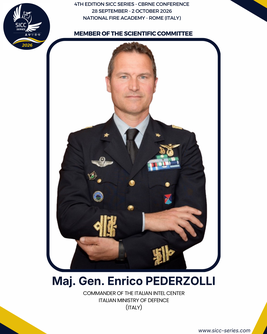
Enrico Pederzolli is a Major General of the Italian Air Force, and in 2023 he took the Commanding position of the Italian Defense Joint Intelligence Center. He joined the Italian Air Force Academy in 1989, and graduated cum laude in 1993 with an Aeronautical Sciences bachelor degree. He earned a Master’s degree in Mathematics at Milan Cattolica University in 2002, and a Master in International Strategic Studies at the US Air War College in 2013. He has been an operational and qualified test pilot on Tornado and Typhoon fighters. He took part to several military operations, such as Decisive Endeavour in Kosovo and ISAF in Afghanistan. During his career he commanded, among others, 4th Wing Eurofighter Air Defense Base in Grosseto. Since 2019 he served as Italian Defense Attaché in London (UK) until 2022.

Vincenzo Romano is Director of the Rome 2 Section of the National Institute of Geophysics and Volcanology (INGV), where he is also a senior researcher with extensive experience in radio science, space weather, and GNSS-based monitoring systems. His research focuses on ionospheric physics, satellite-based measurements, and the analysis of geophysical and environmental phenomena, contributing to the development of advanced monitoring and forecasting tools. He has participated in numerous national and international research projects, including European and space agency programmes, often in leading roles, and has been involved in technology transfer initiatives, including the co-founding of a spin-off company in the field of space and environmental technologies. His work supports both scientific research and operational applications related to environmental monitoring, risk assessment, and space weather services.

Andrea Simone is a Brigadier General of the Italian Army and currently serves as Commander of the Artillery Command of the Italian Army. He has extensive experience in artillery operations, military training, and operational planning, developed through a long career in command and staff positions. He has led units in both national and international contexts, contributing to operational readiness and capability development. In his current role, he oversees training, doctrine, and operational activities of the artillery branch, supporting the integration of advanced systems and multinational cooperation. His expertise focuses on artillery operations, military leadership, and preparedness in complex and high-risk scenarios.
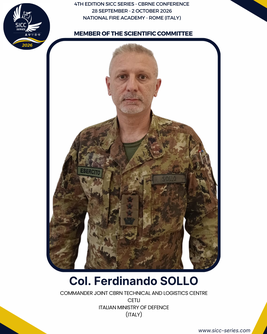
Ferdinando Sollo is a Colonel of the Italian Army Corps of Engineers and currently serves as Director of the Joint CBRN Technical Logistics Centre (CETLI NBC) in Civitavecchia. He holds a degree in Computer Science and has extensive experience in defence systems, armaments, and technical program management. He has served in key national and international roles, including positions within the Directorate of Land Armaments, the Defence General Secretariat, and the OCCAR FSAF-PAAMS Programme in Paris. He has been involved in the development and management of advanced missile systems and defence technologies. He has also been deployed in international missions in Kosovo. His expertise focuses on defence systems engineering, CBRN capabilities, and technical-logistical support in complex operational environments.
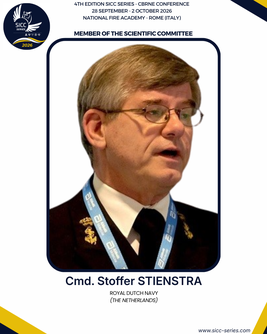
Stef (Stoffer) Stienstra is a medical doctor and biochemist and a former Commander (OF-4) of the Royal Dutch Navy Reserve, with a 40-year career in the Dutch Armed Forces as a CBRN Subject Matter Expert. He has extensive experience in biodefence, public health, and medical consequence management in both military and civilian contexts. He has been involved in international missions and EU-supported projects, contributing to civil–military cooperation and global health security initiatives. He has served as a lecturer at the NATO School and the Joint CBRN Defence Centre of Excellence, and as a visiting professor at several universities, including the University of Rome Tor Vergata. His expertise focuses on biodefence, infectious diseases, and CBRN risk management in complex and high-risk scenarios.

Salvatore Stramondo is Director of the Earthquakes Department at the National Institute of Geophysics and Volcanology (INGV) and a leading expert in geodesy and satellite remote sensing applied to seismic hazard analysis. His research focuses on the use of advanced satellite techniques, including Synthetic Aperture Radar (SAR) and GNSS, for the study of ground deformation and earthquake processes. He has contributed to the development of rapid mapping and damage assessment methodologies supporting civil protection and emergency response. He has participated in numerous national and international research projects and has authored a large number of scientific publications, collaborating with major research institutions and space agencies in the field of Earth observation and natural hazard monitoring.

Bruno Strati is a Prefect of the Italian Republic and currently serves as Director of the Central Directorate for Inspection Activities and Legal Affairs within the Department of the Fire Brigades, Public Rescue and Civil Defence at the Ministry of the Interior.  He has extensive experience in public administration, legal affairs, and institutional oversight, developed through a long career within the Italian Prefectural system. In his current role, he oversees inspection activities across central and territorial offices, as well as legal support, litigation management, and prevention of administrative disputes.  He has contributed to the development of legal frameworks and administrative practices within the Ministry of the Interior and has authored several publications on legal, historical, and institutional topics. His expertise focuses on administrative law, public governance, and institutional control in complex organizational environments.
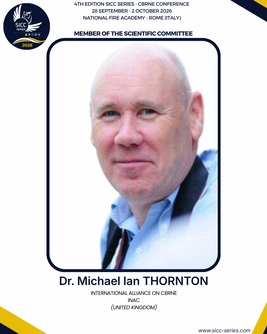
Michael Ian Thornton is a senior European security consultant with over 40 years of experience in nuclear security and CBRN risk mitigation. He previously worked at the European Commission’s Joint Research Centre, where he coordinated the EU CBRN Centres of Excellence Initiative, supporting capacity building and risk reduction activities worldwide. He has extensive experience in international cooperation, training, and strategic planning, contributing to the development of national CBRN action plans and institutional frameworks. He has also been involved in the UK nuclear weapons programmes (Polaris and Trident) and delivers training and exercises for international organizations, including the EU and NATO. His expertise focuses on CBRN risk mitigation, nuclear security, and preparedness in complex and high-risk scenarios.
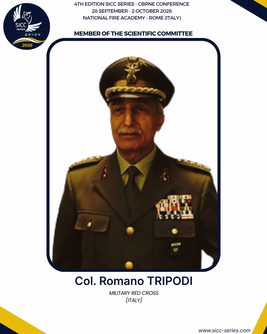
Romano Tripodi is a Colonel and medical doctor of the Italian Military Corps of the Italian Red Cross, specialised in anesthesiology and intensive care. He serves as Head of the Health Office at the National Inspectorate, where he is also responsible for coordinating healthcare training and scientific activities. He has extensive experience in emergency medicine and has participated in numerous national and international humanitarian and military missions, including major disaster responses such as the Umbria-Marche and Abruzzo earthquakes. His professional activity focuses on medical preparedness, field healthcare organisation, and training of medical personnel in emergency and complex operational scenarios, contributing to the integration of military and civilian healthcare response systems.

Professor Gianluca Verona Rinati is Full Professor of Applied Physics at the University of Rome Tor Vergata currently serving as Director of the Department of Industrial Engineering. From 2023 to 2025, he coordinated the Ph.D. program in Industrial Engineering at the University of Rome Tor Vergata. His research activity focuses on the growth and characterization of synthetic diamond and on the design and fabrication of novel diamond-based devices, including dosimeters and microdosimeters for radiotherapy, neutron detectors for fusion applications, X-ray and extreme-UV detectors for plasma diagnostics, diamond substrates for biological applications, field-effect transistors for high-frequency and high-power electronics, nonlinear detectors for ultrafast laser pulse characterization, and advanced detectors for laser–matter interaction studies in particle acceleration and nuclear fusion.

Prof. Noboru Takamura, MD, PhD is Director of the The Great East Japan Earthquake and Nuclear Disaster Memorial Museum and Professor in the Department of Disaster Resilience and Science at the Atomic Bomb Disease Institute. He also serves as Vice Director of the Institute of Environmental Radioactivity and is a member of the Fukushima Prefectural Oversight Committee for the Fukushima Health Management Survey. A physician and internationally recognized expert in radiation medicine, disaster resilience, and radiation health sciences, Prof. Takamura has played a leading role in the long-term health management and recovery efforts following the Fukushima Daiichi nuclear disaster. His research focuses on radiation health risk assessment, disaster medicine, environmental radioactivity, epidemiology, and risk communication, contributing extensively to international scientific cooperation and public health preparedness.

Antonello Vespaziani is a Lieutenant General of the Italian Army and currently serves as Commander of the Army Command for Training, Specialization and Doctrine. He joined the Army in 1985 and was commissioned as an Artillery Officer after graduating from the Military Academy of Modena and the Application School. He has held numerous command and staff positions at unit and strategic level, including command of the 132nd Armoured Brigade “Ariete” and senior roles within the Defence General Staff and Army Personnel Department. He also served as Deputy Chief of Cabinet to the Minister of Defence with responsibility for military personnel affairs. He has been involved in NATO-related activities and operations, including participation in missions in Kosovo, contributing to multinational cooperation and interoperability. He has been awarded several decorations, including Commander of the Order of Merit of the Italian Republic, the Gold Medal for Long Command in the Army, the Mauritian Medal for long military service, and NATO commemorative medals for operations. His expertise focuses on military leadership, training systems, and force development in complex and high-risk scenarios.
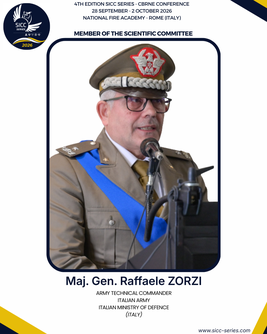
Raffaele Zorzi is a Major General of the Italian Army and currently serves as Army Technical Commander at the Italian Ministry of Defence (Italy). He has extensive experience in defence systems, armaments, and technical evaluation. He serves in senior roles within the Directorate of Land Armaments (TERRARM), where he has held key positions including Head of Department and Head of Coordination and Certification Offices. He has developed a long career within the Ministry of Defence, contributing to the testing, validation, and acquisition of advanced military systems and equipment, including land platforms and CBRN-related capabilities. He has also served as Director of the Multifunctional Experimental Centre of Montelibretti, supporting research and technological innovation for defence applications. He holds a degree in Mechanical Engineering and advanced military staff qualifications. His expertise focuses on defence technologies, systems evaluation, and capability development in complex operational environments.